Just Playing Around
Steps to stop trying to create the "perfect" thing and make YOUR thing (with minimal waste)

When I was in high school our art teacher wouldn’t let us erase things on our sketches so we couldn’t try to make it perfect. We had to accept what was in front of us that we’d already drawn. This taught us to be ok with whatever came from what we made as ours and learn from it.
Over time, as adults, making mistakes becomes more risky. More to lose, more to emotionally make peace with, more to accept even if the outcome isn’t pretty. Thus begins the habit of playing it safe in the world, to avoid hurt, to avoid hurting others..and so it goes. As a recovering perfectionist who’s made her fair share of mistakes, life has taught me that you cannot always erase your work. Sometimes you have to accept the outcome, no matter how messy it is.
Because I never leaned into this concept until recently, I’ve discovered that playing it safe produced in me a system of soulless works that were cute but didn’t completely represent who I was at my core.
The biggest disservice we can do to ourselves is not create our ideas, even the bad ones. Doing this teaches us much about our minds, our process and what we want organically. If you are in the process of dispelling perfection and wanting to find ourself in creating again, I’ve come up with some tips for how to make the process of playing around easier, organic, authentic, enjoyable and limited in waste. I hope you find them helpful.
Create an outline but let go of the outcome
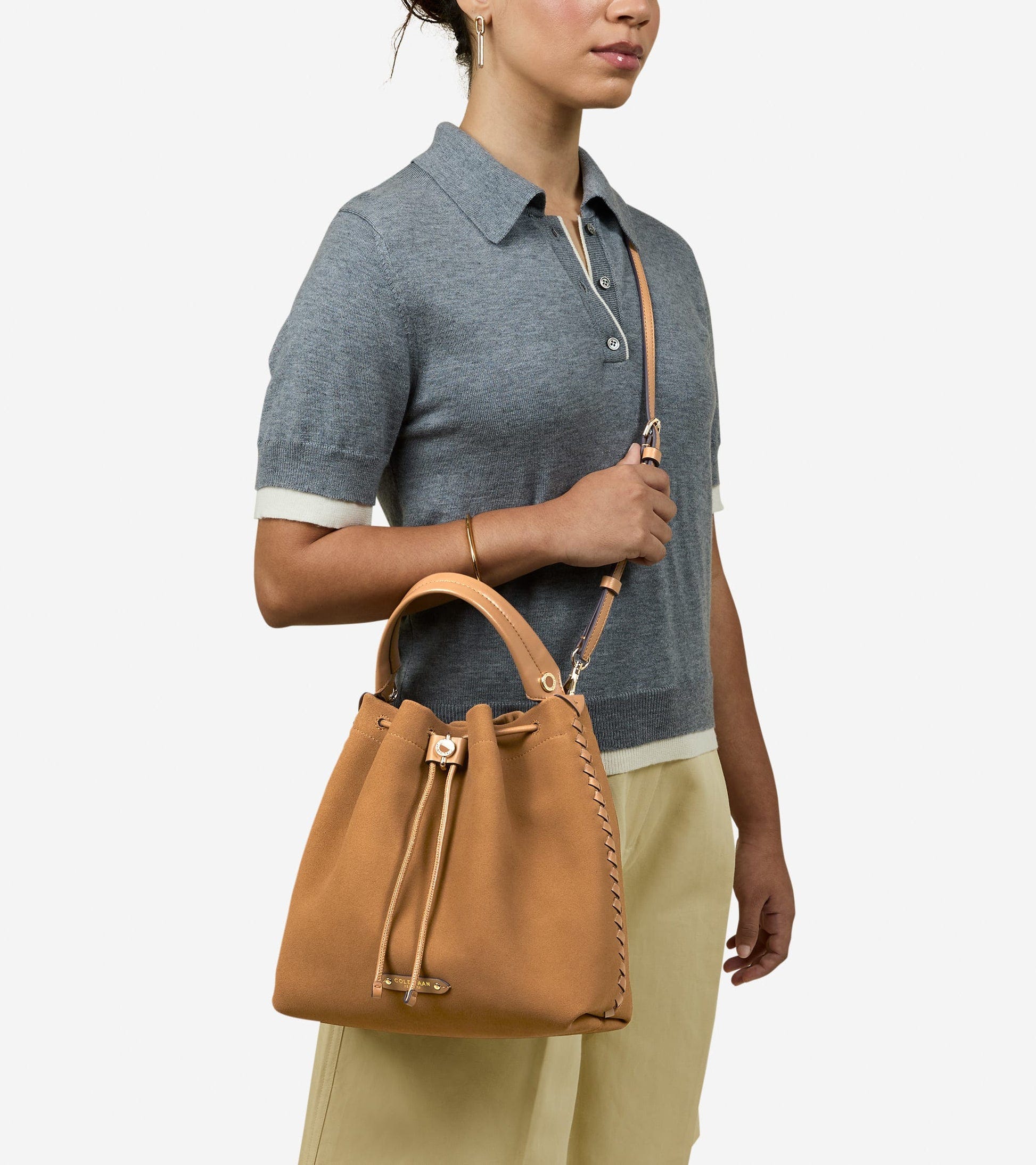
I saw a drawstring bucket bag a Cole Haan and absolutely loved it but did not even consider how I’d begin making it myself or making it less…boring looking.
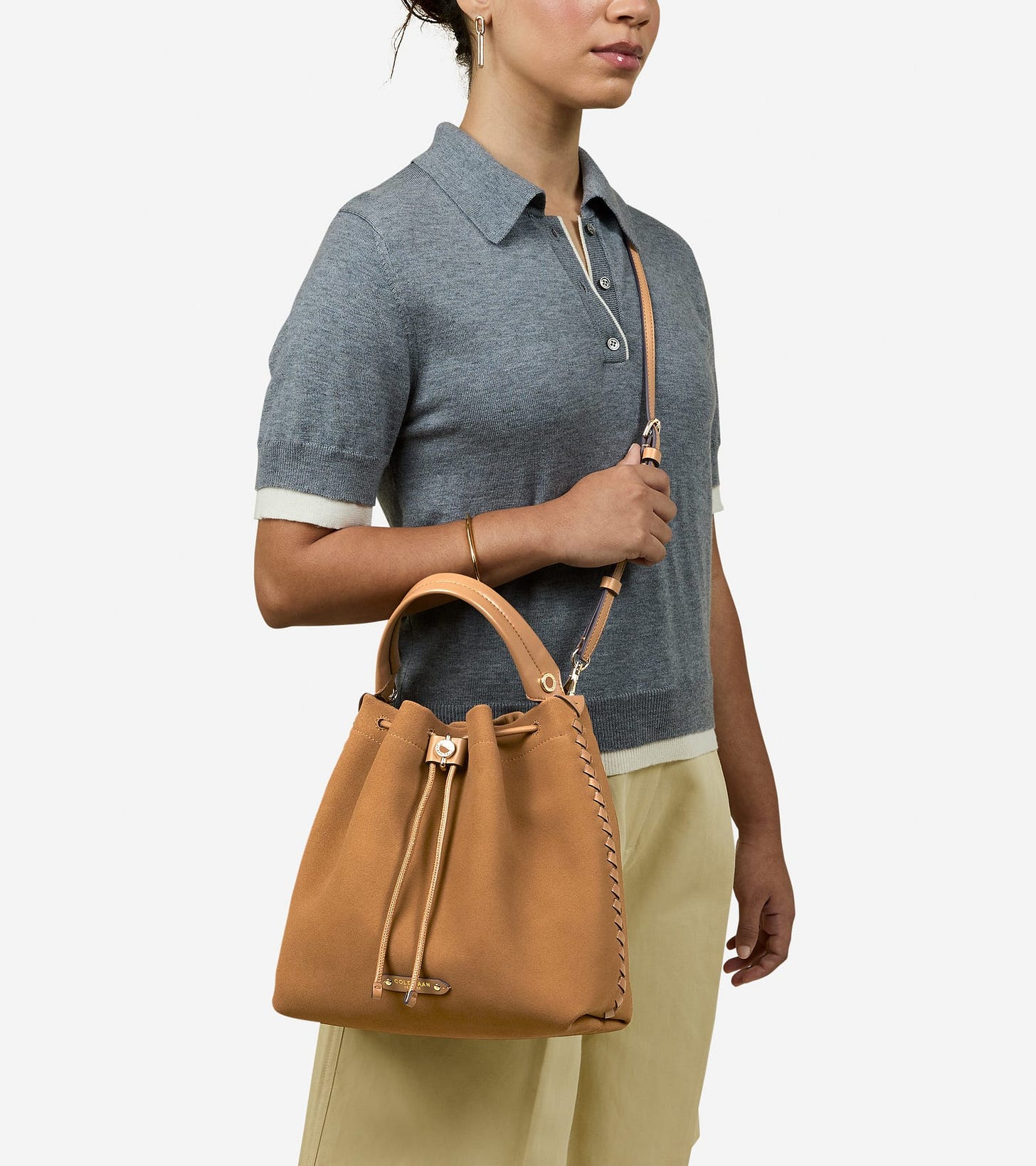
Then, while packing an alterations order for a friend, I saw this paper bag, and I knew, this is it! I saw the bones of the bag I’d been eyeing and picked out some fabric I wanted to play with that spoke to me internally and brought me joy.
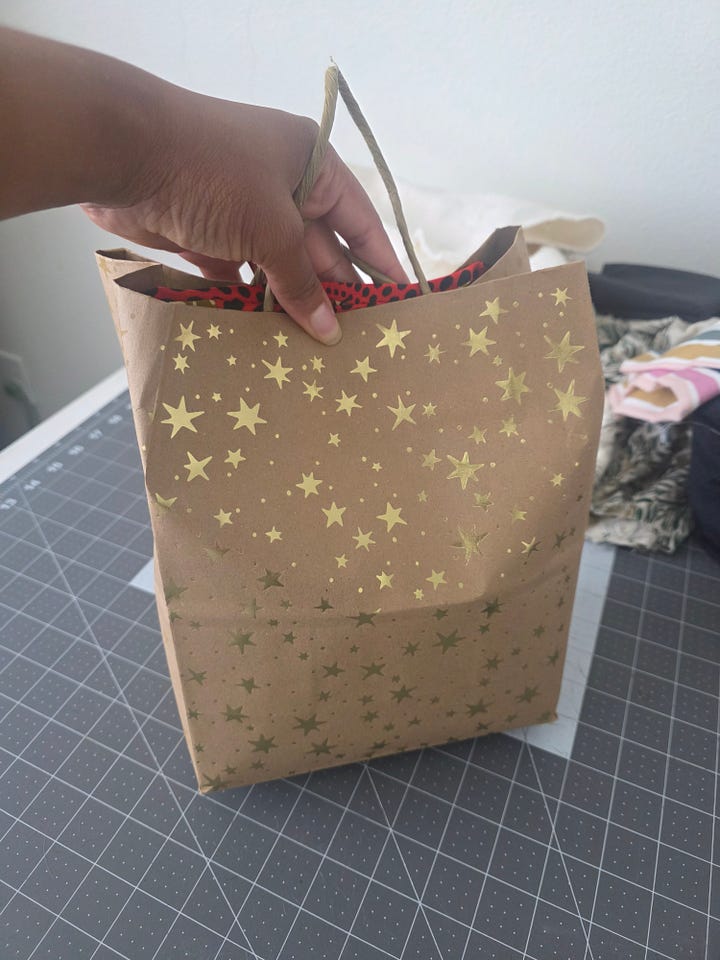
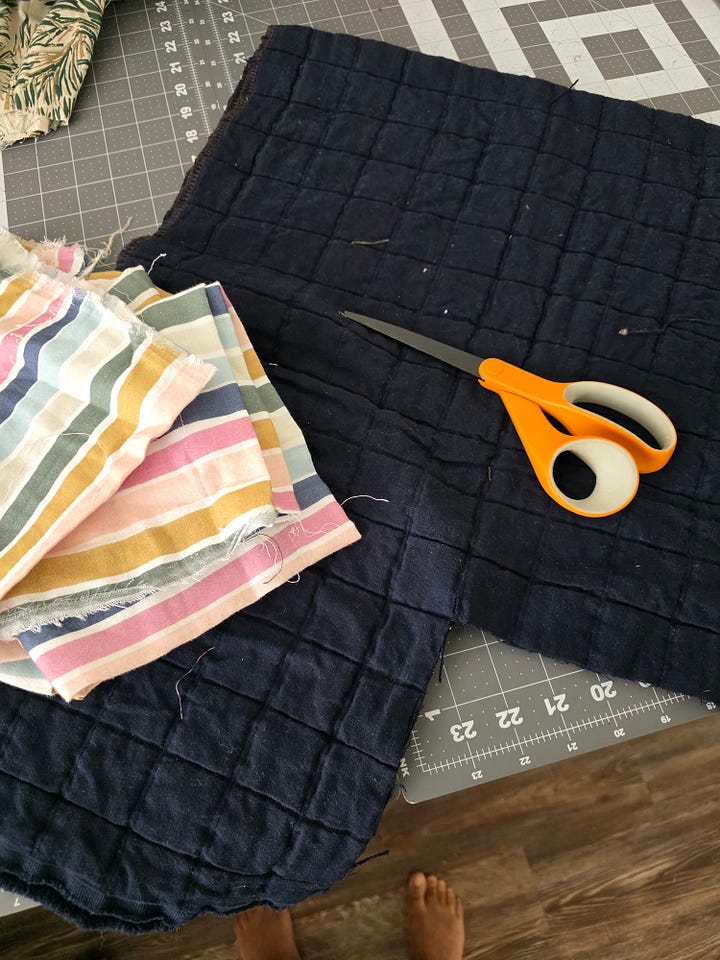
The key to this of course is asking a crucial question: “what if…?”. Imagination begins with letting go of “it can’t be” and saying “what if it could be…?” .
Jot your idea on a piece of paper (or actually make use of your Pinterest inspo board), make a sketch, a rough plan etc and then just start making without any expectation. If something doesn’t go to plan, find a way use what you have in a different way (see step 3).
…or don’t.
Alternatively you can approach the play process by just winging it and seeing where your scissors lead you. Maybe there has been an idea floating in your head for awhile that you really want to try and you’re wanting to just see what becomes of your process without thinking about it. That’s perfectly fine too.
Don’t start over. (I dare you)
This is a hard task. When something doesn’t work, our habit is to throw it away. Of course sometimes this is completely appropriate, not EVERYTHING can come out well or functional and some things are simply a learning experience. But learning to work with what you have teaches you to make the most out of something already existing instead of thinking it could always be better if you started over.


Keep reading with a 7-day free trial
Subscribe to The Architecture of Life to keep reading this post and get 7 days of free access to the full post archives.